Old Kingdom False Doors on Display
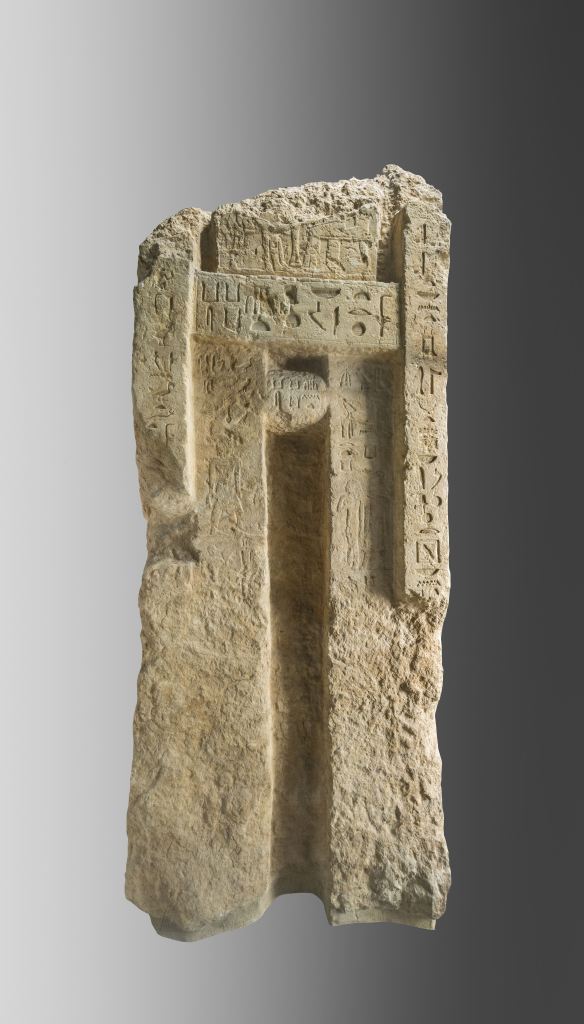
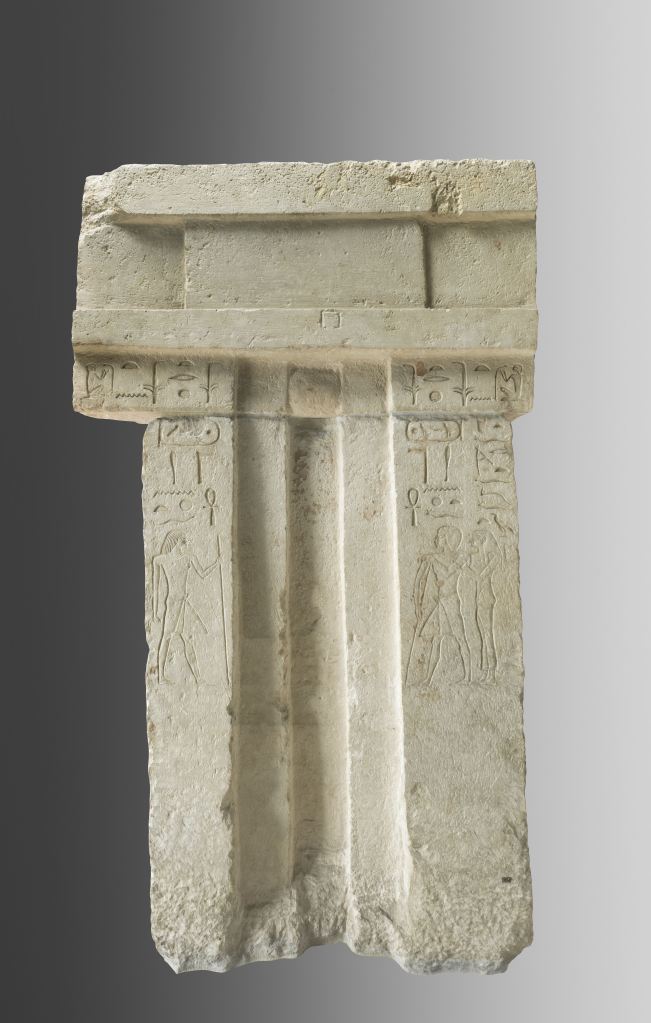
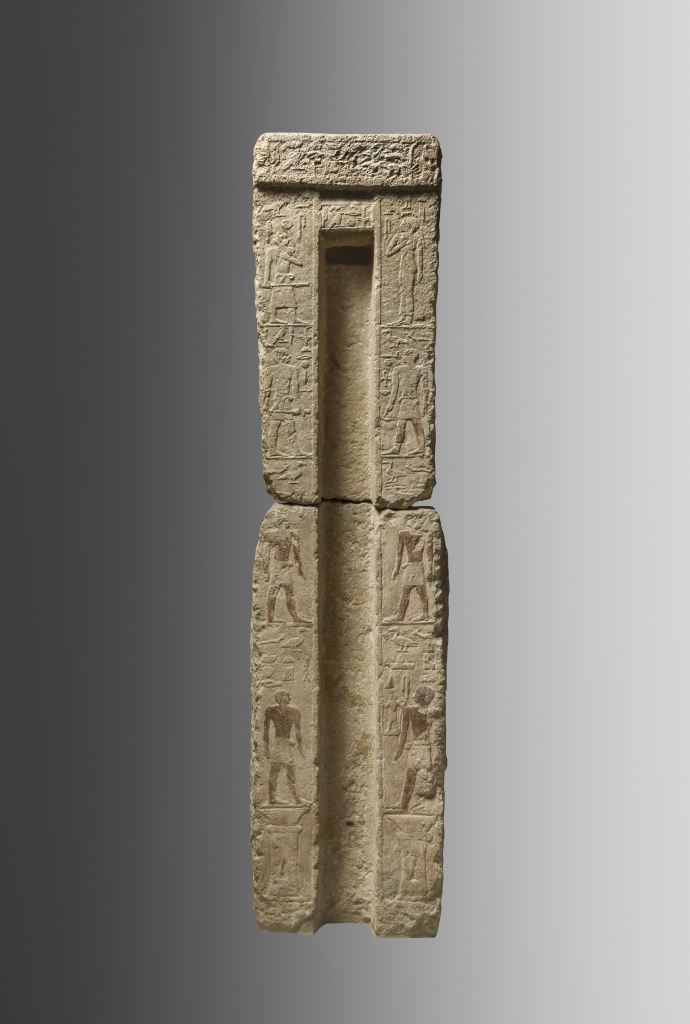
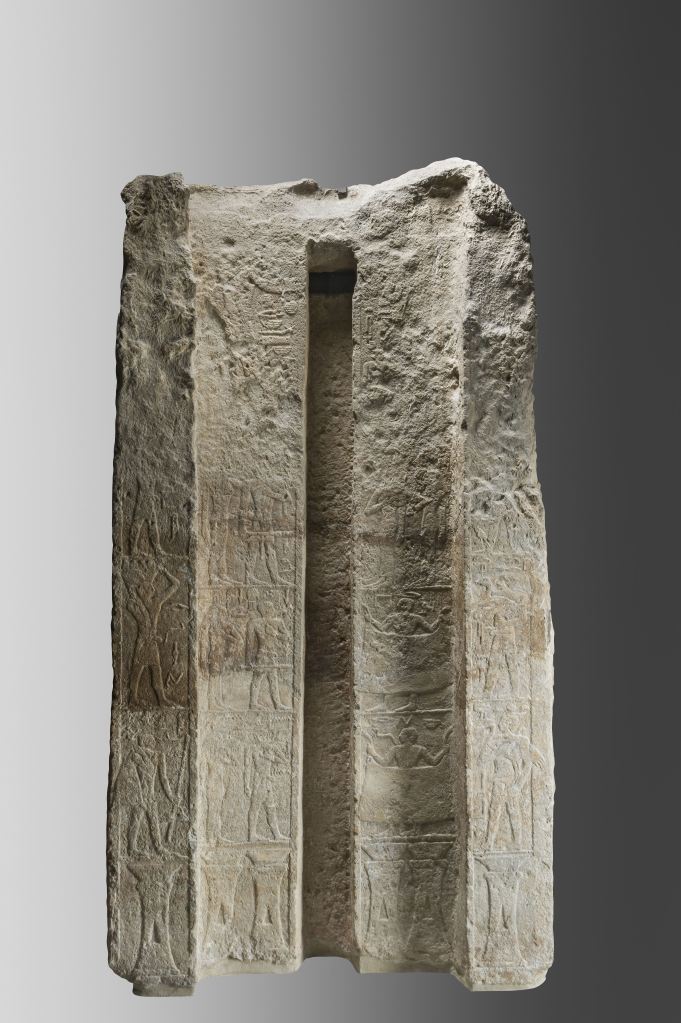
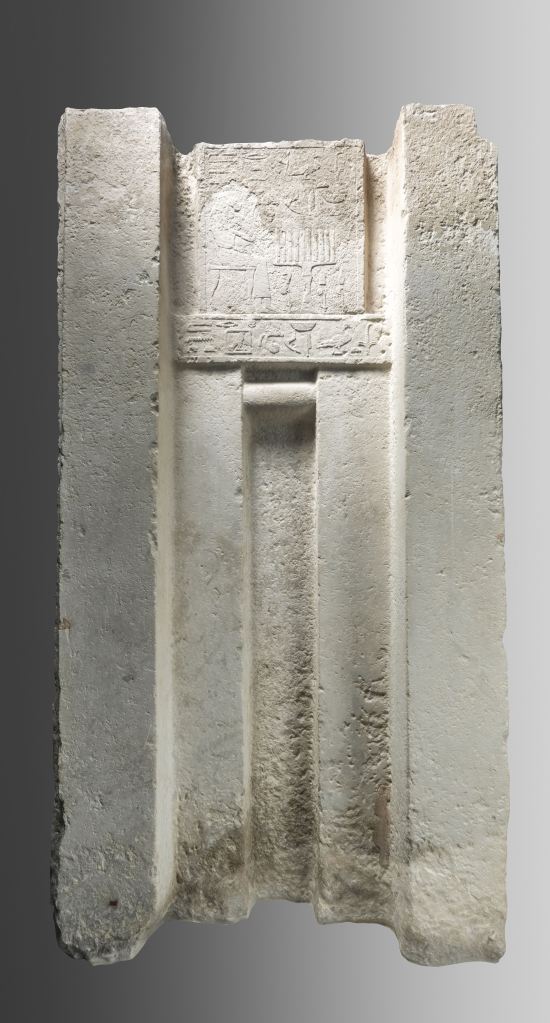
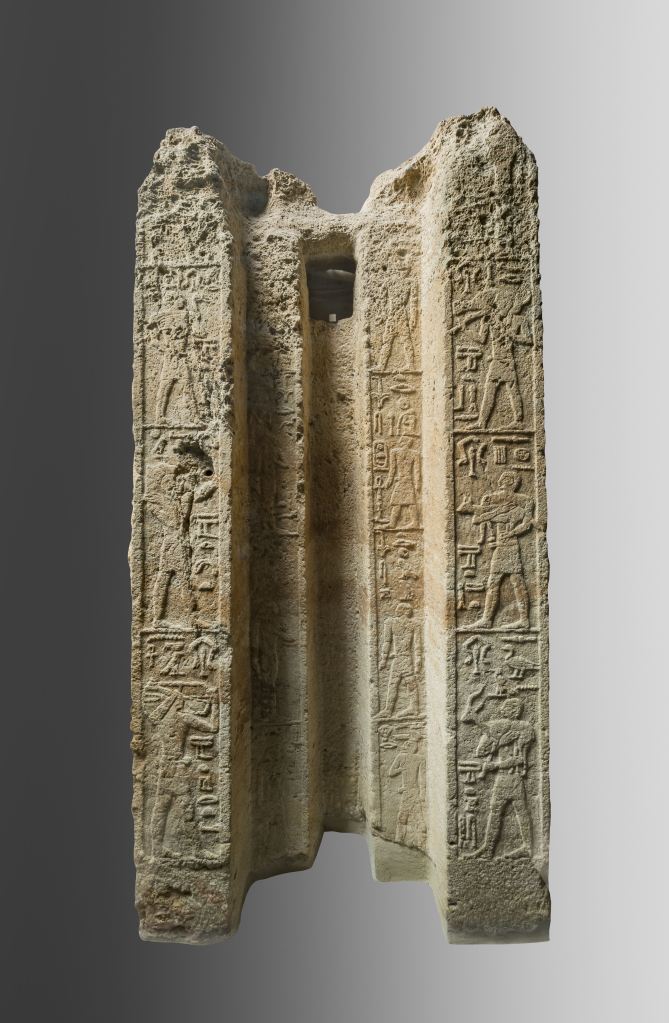
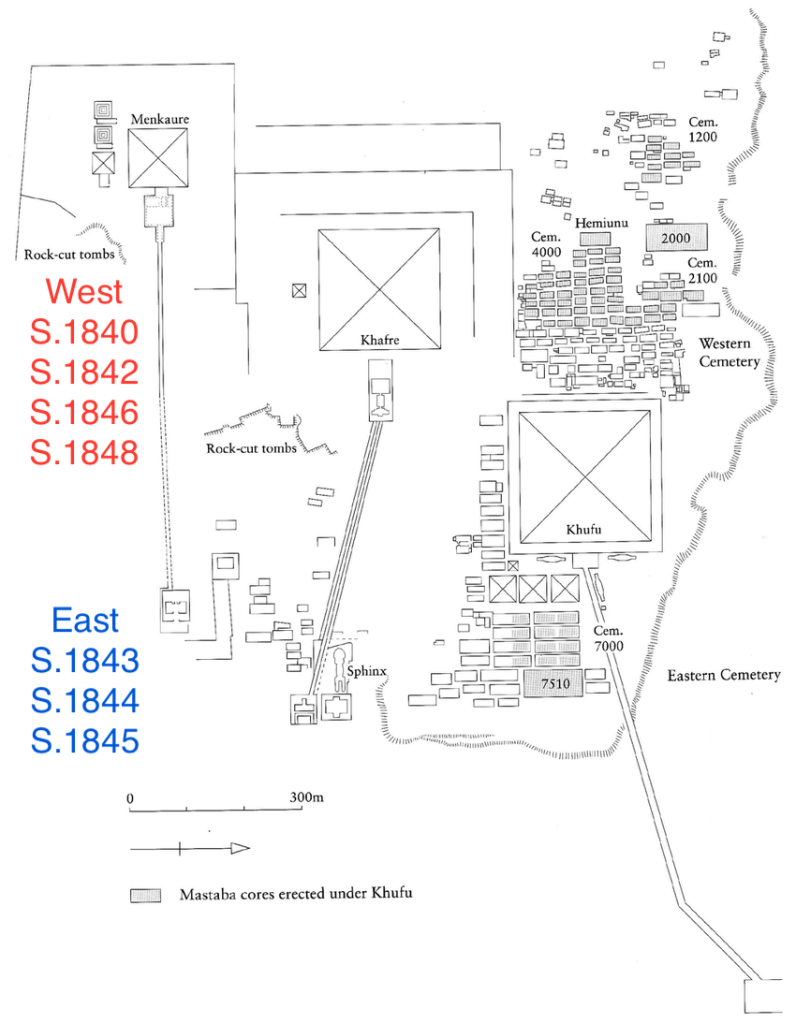
False Door of Princess Wehemnefret S.1840 Materiality Case Study
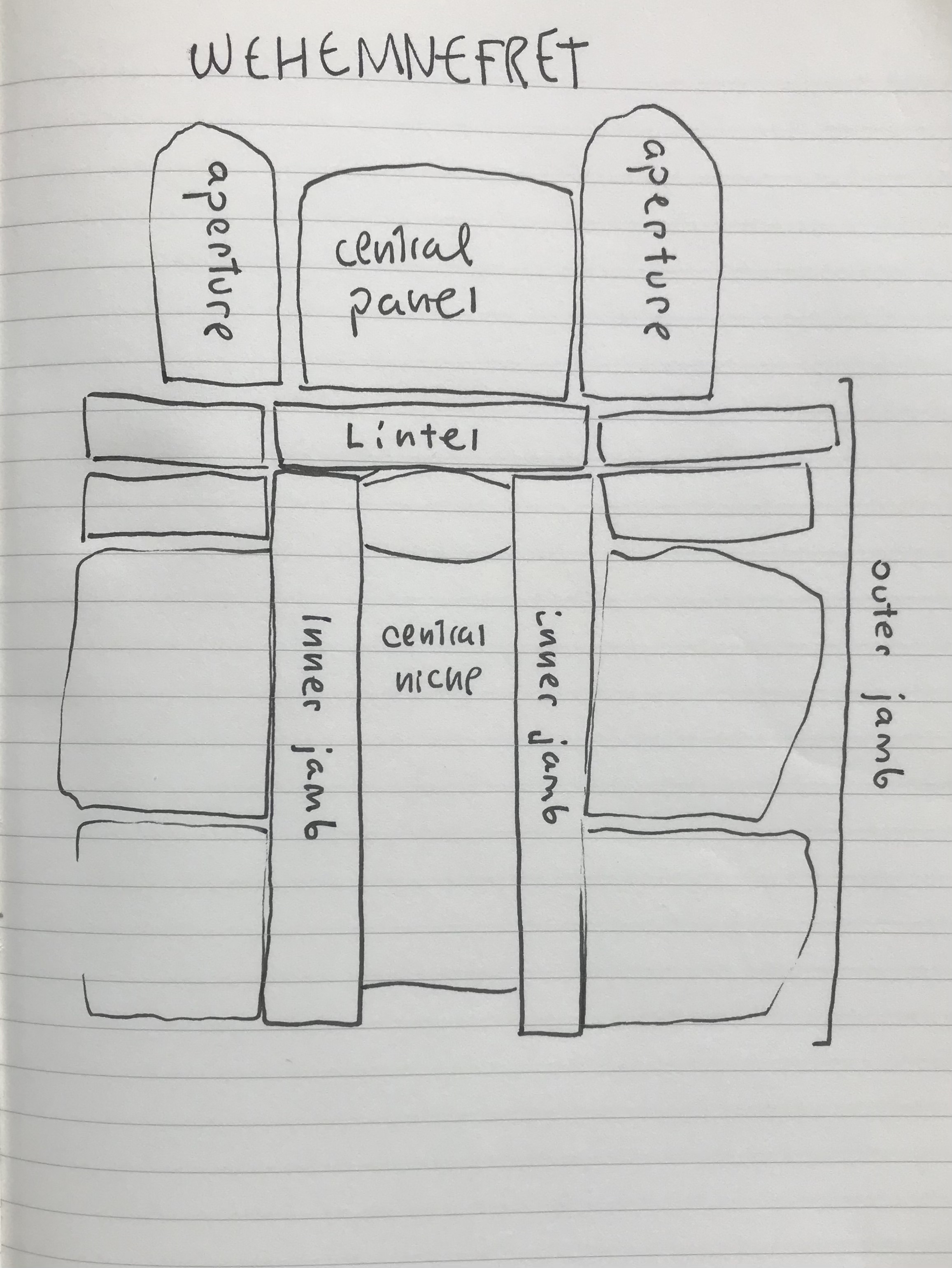
The false door of princess Wehemnefret is a two jamb door. A jamb is the vertical post of a doorframe. False doors can be classified by its number of jamb pairs. This false door has two pairs, an inner and an outer, and thus is named a two-jamb door. The outer jambs appear to have been broken into five pieces on either side. They have been broken along the same latitude and in relatively straight lines. This might suggest that these breaks were purposeful, and perhaps done when excavators were removing the door from its original site. The inner jambs, central niche, lintel, and central panel all appear to be intact. The central niche and inner jambs appear to be attached, while the central panel and lintel appear to be detached. Unlike the other six false doors displayed, S.1840 is being held upright by a metal mount which have been drilled into the wall and wedged into the breakage lines of the false door. The display of S.1840 is also unique from the other false doors in the room. Instead of being positioned behind a glass partition, S.1840 stands on a roped off platform with an offering table in front of the door. By including the offering table, this display showcases the funerary customs associated with false doors, and provides more visual guidance on how Ancient Egyptians would have used the door, and move themselves in relation to it.
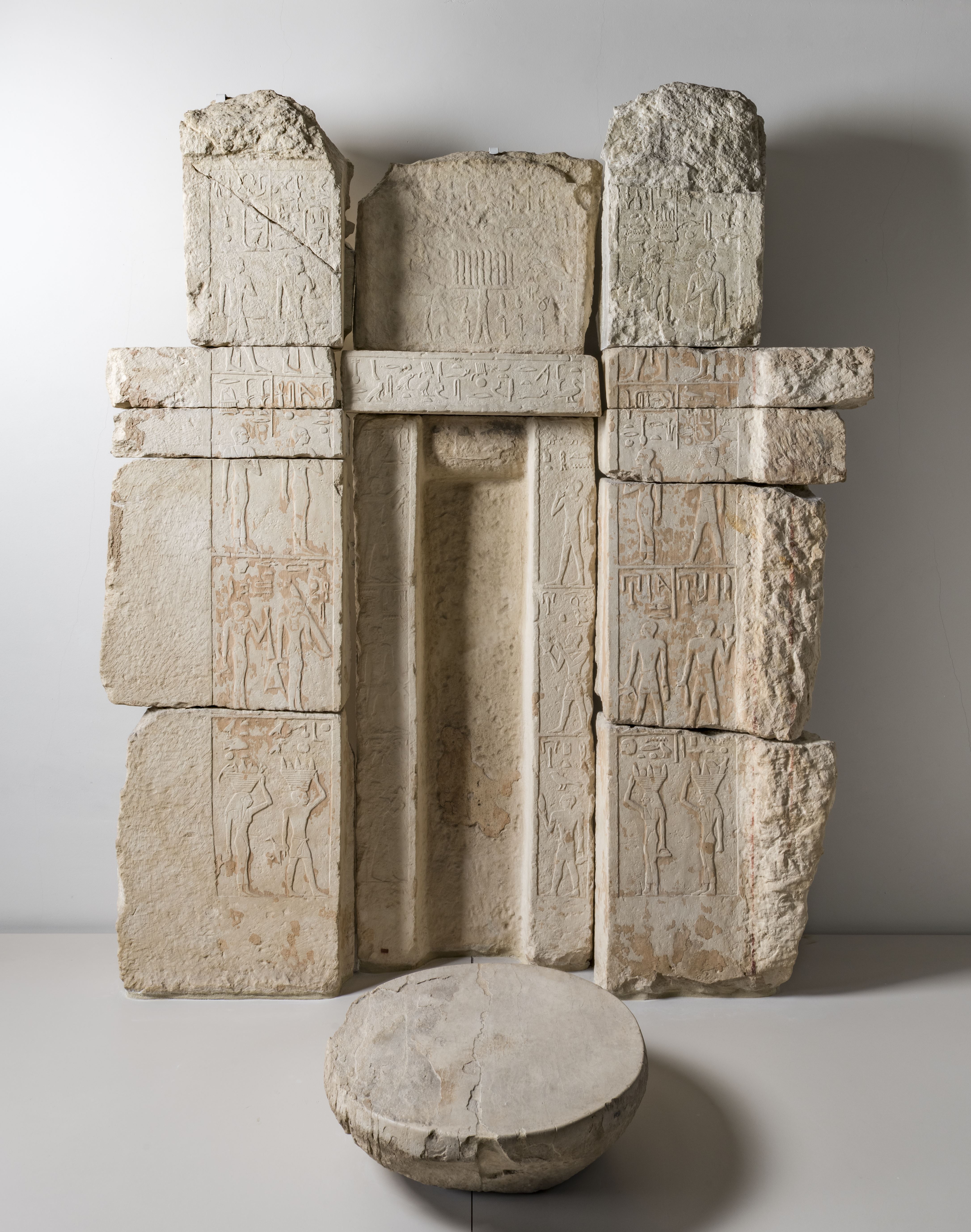
All false door photos: credit of Museo Egizio.
 lilyfife.com