Old Kingdom False Doors
PROJECT BY LILY FIFE SCHAEUFELE
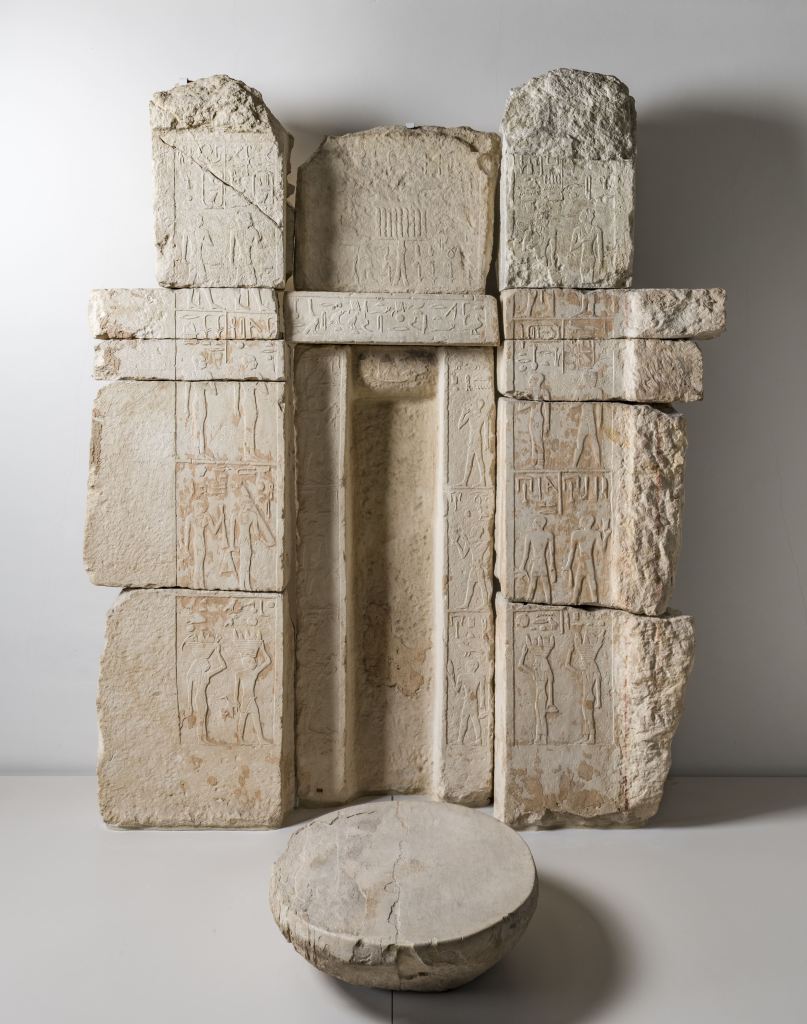
False Door of Princess Wehmenenfret S.1840
- Material: Stone/Limestone
- Dimensions: 202.5 x 170 x 37 cm
- Date: 2543–2435 BCE
- Period: Old Kingdom
- Dynasty: 4th Dynasty
- Provenance: Giza, western cemetery / mastaba of Wehemnefret.
- Acquisition: Schiaparelli excavations (1903-1906)
- Museum Location: Sala 02 Basamento
Intro to Project
Interpretive Label
The false door is a ‘point of contact’ between the living and the deceased of the tomb. False doors were built into tomb structures, and can be thought of as a gateway between the world of the living and the dead. However, only the deceased can move into the threshold of the door. They would do this to collect offerings and letters deposited at the door by their family or cult members. These interactions show us that when tomb owners died, they were not thought of as entirely cut off from the living world. Instead, the deceased were very much a part of the living community.
The false door’s utility was tied to its location as part of the tomb, where in the Old Kingdom, the deceased were thought to live within after they died. We might, as visitors of the Museum, think about the implications of the false door having moved to an entirely different building and location. What does its detachment from the tomb do to its utility as a threshold? Does the other world move with the False Door? Would the Ancient Egyptian have thought about these parameters?
Project Goals
- To examine the seven Old Kingdom false doors within the museological and architectural context of the Museo Egizio.
- To understand the purpose, use, and history of Old Kingdom false doors in general.
- To generate new ways for the public to interact and understand the false doors in the Museo Egizio.
 lilyfife.com